A larder is a cool area for storing food prior to use. Larders were commonplace in houses before the widespread use of the refrigerator. Many larders had small unglazed windows with the window opening covered in fine mesh. This allowed free circulation of air without allowing flies to enter. Many larders had tiled or painted walls to simplify cleaning. Older larders and especially those in larger houses had hooks in the ceiling to hang joints of meat or game. Others had insulated containers for ice, anticipating the future development of refrigerators.

A pantry is a room where food, provisions or dishes are stored and served in an ancillary capacity to the kitchen. The pantry sometimes contained a thrawl, which was a stone slab or shelf used to keep food cool in the days before refrigeration was domestically available. In the late medieval hall, a thrawl would have been appropriate to a larder. In a large or moderately large nineteenth century house, all these rooms would have been placed as low in the building as possible in order to use the mass of the ground to retain a low summer temperature.
In a late medieval hall, there were separate rooms for the various service functions and food storage. A pantry was where bread was kept and food preparation associated with it done. The head of this room was referred to as a pantler. There were similar rooms for storage of bacon and other meats (larder), alcoholic beverages (buttery) and cooking (kitchen).
In America, pantries evolved from Early American "butteries", built in a cold north corner of a Colonial home, into a variety of pantries in self-sufficient farmsteads. Butler's pantries, or china pantries, were built between the dining room and kitchen.
A butler's pantry or serving pantry is a utility room primarily used to store serving items, rather than food. Traditionally, a butler's pantry was used for storage, cleaning and counting of silver; European butlers often slept in the pantry, as their job was to keep the silver under lock and key. The wine log and merchant's account books may also have been kept in there.
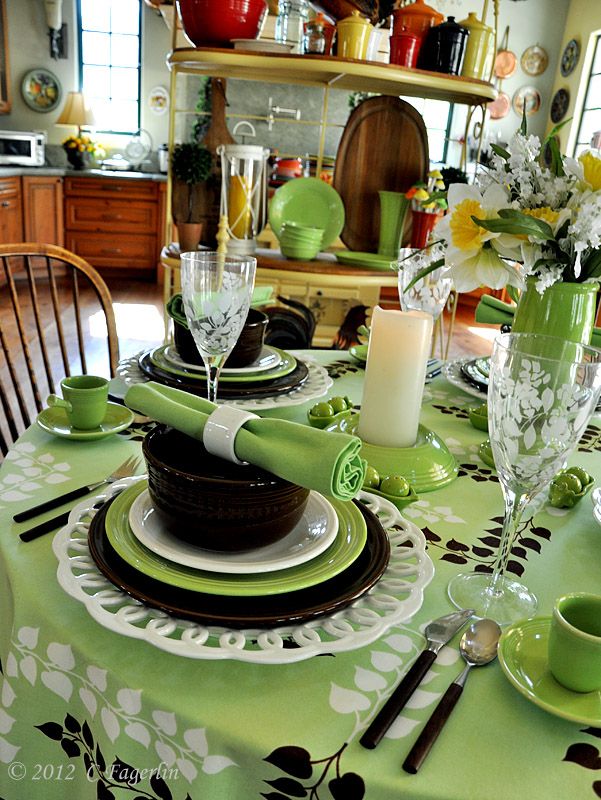
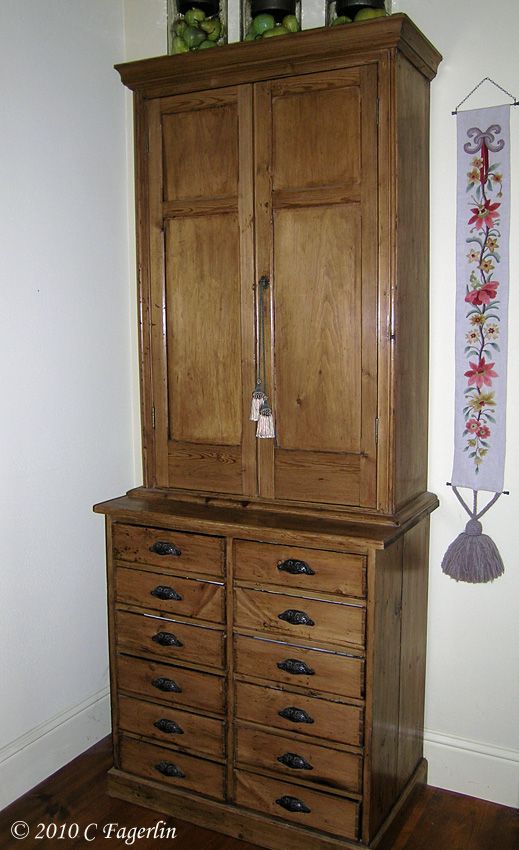
In modern homes, butler's pantries are usually located in transitional spaces between kitchens and dining rooms, and are used as staging areas for serving meals. They commonly contain counters and storage for tableware, serving pieces, table linens, candles, wine, and other dining-room articles. The pantry is making a comeback in American and English homes as part of a resurgence of nesting and housekeeping since the late 1990s. It is one of the most requested features in homes today. There is a charm and nostalgia to the pantry.
How do your store your food, tableware and linens?
















 Posts
Posts